
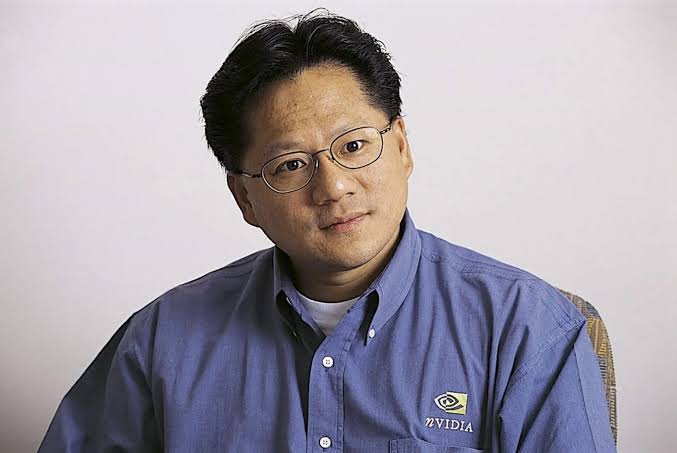

Jensen Huang is one of the most influential leaders in the global technology industry. As the co-founder and long-time CEO of NVIDIA, Huang has played a defining role in the advancement of graphics processing, artificial intelligence (AI), and high-performance computing. This in-depth biography explores his early life, professional journey, net worth, achievements, and long-term legacy.
Jensen Huang, born Jen-Hsun Huang, is a Taiwanese-American business executive, electrical engineer, and philanthropist. Best known as the CEO of NVIDIA, he has guided the company from a small semiconductor startup to a global technology titan. Under his leadership, NVIDIA has become a powerhouse in gaming GPUs, AI computing, and data center technologies, shaping industries far beyond consumer graphics.
Biography: Early Life, Education, and Family
Early Life and Background
Jensen Huang was born on February 17, 1963, in Taipei, Taiwan. His early childhood was spent in Taiwan and later Thailand before his family moved to the United States when he was nine years old. The transition presented challenges he spoke very little English but his parents emphasized education and resilience. His mother famously taught him English using a dictionary, despite not being fluent herself.
Huang grew up partly in Kentucky before settling in Oregon, where he completed high school. His multicultural upbringing and early struggles helped shape his work ethic and leadership style.
Education
Huang attended Aloha High School in Oregon and excelled academically. He later pursued higher education in engineering:
- Bachelor of Science in Electrical Engineering from Oregon State University (1984)
- Master’s Degree in Electrical Engineering from Stanford University (1992)
His time at Stanford, in particular, exposed him to Silicon Valley’s emerging tech ecosystem and helped lay the groundwork for his entrepreneurial ambitions.
Family Life
While studying at Oregon State University, Huang met Lori Mills, who would later become his wife. The couple has two children, Spencer and Madison. Huang is known to keep his personal life private, but his family has occasionally appeared at NVIDIA events and philanthropic initiatives.
The Huang family resides in California and maintains a low public profile compared to the high visibility of Jensen’s career.
Career Overview: From Startup Founder to Tech Visionary
Early Career
Before founding NVIDIA, Jensen Huang worked at Advanced Micro Devices (AMD) and later at LSI Logic, where he learned about computer chip engineering and gained leadership experience. These roles helped him understand both the technical and business sides of the semiconductor industry.
Founding NVIDIA
In 1993, at the age of 30, Jensen Huang co-founded NVIDIA with Chris Malachowsky and Curtis Priem. The idea for the company was famously conceived during a brainstorming conversation in a Denny’s restaurant in California.
Huang was chosen as CEO from day one due to his vision, technical expertise, and leadership abilities.
Early Challenges and Breakthroughs
NVIDIA focused on graphics processing technology at a time when the gaming and multimedia market was rapidly expanding. Despite intense competition and financial challenges in its early years, NVIDIA eventually broke through with:
- The introduction of the RIVA series of graphics chips
- The release of the GeForce 256, marketed as the world’s first “GPU”
- Continuous improvements that made NVIDIA the industry standard for gaming graphics
Expansion Into AI and Data Centers
Under Huang’s leadership, NVIDIA strategically shifted from gaming-only products to a broader focus on:
- Artificial intelligence (AI)
- Deep learning hardware and software
- Data center GPUs
- High-performance computing (HPC)
- Automotive computing platforms
This pivot propelled NVIDIA into becoming one of the most valuable companies in the world and a core player in AI development globally.
Historic Market Milestones
Over the years, NVIDIA has achieved extraordinary growth, including:
- Becoming the leading provider of GPUs for AI research
- Expanding into cloud computing and enterprise AI solutions
- Reaching multi-trillion-dollar valuations
- Becoming one of the top publicly traded companies by market capitalization
These achievements are widely credited to Huang’s visionary leadership.
Controversies and Criticisms
Jensen Huang generally maintains a positive public image and has avoided major personal scandals. However, a few criticisms and industry-related controversies have surfaced:
Market Dominance Concerns
NVIDIA’s dominance in GPU and AI markets has raised questions about competition and industry consolidation. Some analysts argue that the company’s leading position could create barriers for smaller competitors.
Wealth and Tech Power Concentration
As NVIDIA’s valuation soared, Huang’s personal wealth expanded dramatically. Critics of tech billionaires have used him as an example of extreme wealth concentration within the tech industry, though this is part of broader societal debates rather than specific misconduct.
Market Volatility
NVIDIA’s rapid rises and occasional sharp declines, in market value have sparked scrutiny from investors who warn that the company’s influence creates significant ripple effects across global markets.
Despite these critiques, none have significantly damaged Huang’s career or public reputation.
Net Worth and Financial Overview
Jensen Huang is one of the wealthiest individuals in the world. His net worth fluctuates with NVIDIA’s stock price, but as of 2025, his estimated net worth is approximately $162 billion.
Sources of Wealth
Huang’s wealth comes primarily from:
- His ownership stake in NVIDIA, which is roughly 3–4% of total outstanding shares
- Executive compensation tied to company performance
- Long-term stock growth driven by NVIDIA’s leadership in AI and computing
His wealth has grown rapidly as global demand for AI hardware has surged and NVIDIA GPUs have become indispensable for AI model training.
Legacy and Significance
Jensen Huang’s legacy is firmly established in the history of technology.
Revolutionizing Computing
Huang’s recognition of GPU potential beyond gaming particularly for AI and deep learning helped ignite the modern AI revolution.
Influence in Silicon Valley
He is widely regarded as:
- One of the longest-serving CEOs in tech
- A visionary who predicted the shift toward accelerated computing
- A leader known for humility, precision, and hands-on involvement
Philanthropy and Education
Huang has also donated significant amounts to universities and research institutions, including major contributions to engineering and computer science programs.
Enduring Cultural Impact
With his signature leather jacket and approachable leadership style, Huang has become an iconic figure and a role model for young engineers and entrepreneurs.
Frequently Asked Questions (FAQs)
1. How old is Jensen Huang?
Jensen Huang was born on February 17, 1963, making him 62 years old as of 2025.
2. What is Jensen Huang’s net worth?
His estimated net worth is around $162 billion, largely due to his long-term ownership of NVIDIA stock.
3. What did Jensen Huang study in college?
He earned a Bachelor’s in Electrical Engineering from Oregon State University and a Master’s in Electrical Engineering from Stanford University.
4. What company did Jensen Huang found?
He co-founded NVIDIA in 1993 and has served as its CEO since its inception.
5. Why is Jensen Huang important in the tech industry?
He pioneered the GPU revolution and helped drive advancements in AI, gaming, data centers, and high-performance computing.
6. Is Jensen Huang involved in philanthropy?
Yes. He has donated millions to universities, especially to support engineering and computer science programs.
7. Does Jensen Huang have a family?
He is married to Lori Mills and has two children, Spencer and Madison.
Disclaimer: This biography is compiled from publicly available information and is meant solely for informational purposes. While every effort has been made to ensure accuracy, certain details may vary or be open to interpretation.
