
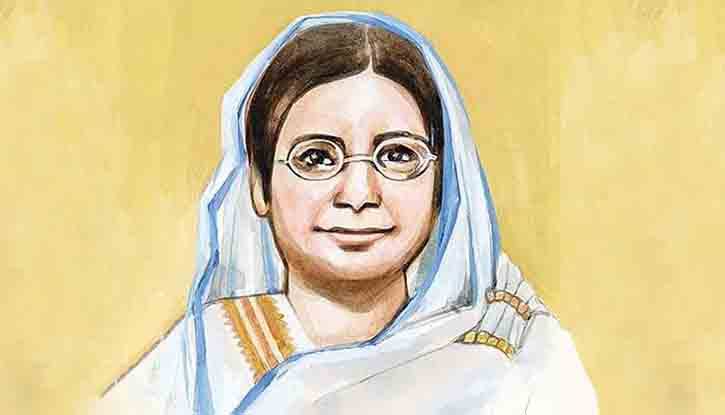

Begum Rokeya, a pioneering social reformer, educationist, and feminist, is widely celebrated for her relentless efforts to empower women in South Asia. Known for her advocacy of female education and social reform during the late 19th and early 20th centuries, Begum Rokeya remains a symbol of progress and equality. In this article, we will explore her life, career, achievements, and lasting legacy, including details about her family, net worth, and enduring influence.
Early Life and Biography
Begum Rokeya, born as Rokeya Sakhawat Hossain in 1880 in Pairabondh, a small village in Rangpur, Bengal Presidency (present-day Bangladesh), was raised in a conservative Muslim family. Despite the societal norms that limited women’s education, she was encouraged by her father to pursue learning. Her early exposure to books and knowledge fostered a lifelong commitment to education and social reform.
Rokeya grew up witnessing the restrictions imposed on women in her community. This inspired her to challenge societal norms and dedicate her life to improving the status of women. She married Sakhawat Hossain, a supportive husband, who shared her vision for female empowerment.
She passed away on December 9, 1932, leaving behind a legacy that continues to inspire generations.
Education and Early Influences
Begum Rokeya received her primary education at home, where her father taught her basic literacy and numeracy. Later, she pursued self-education by reading extensively in Bengali, Urdu, and English. Her exposure to literature, social reform writings, and feminist ideas greatly influenced her worldview.
A pivotal moment in her life was her encounter with progressive thinkers who encouraged women’s education and social participation. This motivated her to establish institutions and initiatives for the welfare and empowerment of women, particularly in rural Bengal.
Career Overview
Begum Rokeya’s career was defined by her tireless advocacy for women’s rights and education. She held no formal political office but became a prominent social reformer and educationist whose influence extended across the Indian subcontinent.
Key Achievements:
- Founding Schools for Girls
In 1911, Rokeya established the Sakhawat Memorial Girls’ School in Kolkata, one of the first schools for Muslim girls in India. Her school focused on modern education, including science, literature, and religious studies, breaking barriers in a society that largely restricted female education. - Literary Contributions
She wrote extensively to promote women’s empowerment, including essays, novels, and articles. Her most notable work, “Sultana’s Dream” (1905), depicted a utopian world where women led society, advocating for gender equality and scientific progress. - Social Reform Initiatives
Rokeya encouraged women to participate in social and public life. She organized women’s gatherings, promoted literacy campaigns, and supported widows and destitute women to gain independence through education and employment. - Advocacy for Women’s Rights
Through her writings and activism, Begum Rokeya became a prominent voice for gender equality, challenging conservative societal norms and influencing the broader feminist movement in South Asia.
Family Background
Begum Rokeya was born into a middle-class Muslim family. Her father, Mir Mosharraf Hossain, supported her education despite social pressures. She married Sakhawat Hossain, who encouraged her public work and activism. The couple had children who later carried forward her legacy of education and social reform. Her supportive family environment played a crucial role in enabling her achievements in a conservative society.
Controversies and Criticisms
Begum Rokeya’s progressive views were often met with resistance. Some conservative factions criticized her for challenging traditional gender roles and advocating women’s education, which they perceived as a threat to societal norms.
Despite criticism, she remained steadfast in her mission. While her views were controversial during her lifetime, they have since been celebrated as groundbreaking, positioning her as a visionary in the field of women’s rights.
Net Worth and Financial Overview
Begum Rokeya was not a wealthy individual in terms of personal fortune. Her primary focus was social service and education rather than accumulating wealth.
- Estimated Net Worth: There are no official records of her personal net worth. Most of her life was devoted to philanthropic work, including founding schools and supporting underprivileged women.
- Sources of Financial Support: Her initiatives were often funded by donations, community support, and contributions from well-wishers.
While her financial wealth was modest, her intellectual and social contributions made her one of the richest figures in terms of cultural and social impact.
Legacy and Significance
Begum Rokeya’s impact is immense and enduring. She is remembered as a trailblazer for women’s education and empowerment in South Asia.
- Rokeya University: Named in her honor, this institution continues her mission of advancing education, particularly for women.
- Rokeya Day: Celebrated annually on December 9 in Bangladesh to commemorate her contributions.
- Influence on Feminism: Her writings and social initiatives laid the groundwork for the modern women’s rights movement in the region.
Her advocacy transcended her time, inspiring educational reforms, feminist thought, and social equality initiatives across generations.
Frequently Asked Questions (FAQs)
1. Who was Begum Rokeya?
Begum Rokeya was a pioneering social reformer, educationist, and feminist from Bengal who advocated for women’s education and empowerment.
2. When was Begum Rokeya born and when did she die?
She was born in 1880 in Rangpur, Bengal Presidency, and passed away on December 9, 1932.
3. What is Begum Rokeya famous for?
She is famous for founding the Sakhawat Memorial Girls’ School, promoting women’s education, and writing influential works like Sultana’s Dream.
4. Did Begum Rokeya have a family?
Yes, she was married to Sakhawat Hossain, and they had children. Her family supported her activism and educational initiatives.
5. What was Begum Rokeya’s net worth?
There is no confirmed net worth, as she focused on social work rather than personal wealth. Her contributions lie in education and social reform.
6. What legacy did Begum Rokeya leave behind?
She left a lasting legacy in women’s education, feminist thought, and social reform. Institutions and annual celebrations commemorate her contributions.
7. Are there institutions named after Begum Rokeya?
Yes, notable examples include Rokeya University in Bangladesh and the Sakhawat Memorial Girls’ School in Kolkata, India.
Conclusion
Begum Rokeya’s life story is a testament to courage, vision, and resilience. She defied societal constraints, championed women’s education, and laid the foundation for gender equality in South Asia. Although she faced criticism and obstacles, her work continues to inspire generations, making her a revered figure in history. Through her schools, writings, and social initiatives, Begum Rokeya’s legacy as a pioneer of women’s empowerment remains alive, ensuring that her mission of education and equality continues to impact lives even today.
Disclaimer: This biography is compiled from publicly available information and is meant solely for informational purposes. While every effort has been made to ensure accuracy, certain details may vary or be open to interpretation.
